
How Roofing Insurance Claims Work in Georgia: A Homeowner's Guide
A hailstorm rolls through Douglas County, the sky clears, and everything looks fine from the driveway. Six months later there's a water stain spreading across the ceiling — and the insurance clock has been ticking the whole time. If you own a home in West Georgia, understanding how roofing insurance claims actually work is the difference between a fully covered roof and a five-figure bill.
At McKinley Roofing and Restoration, we've walked hundreds of Douglasville-area homeowners through the claims process after wind and hail events. This guide covers what your policy actually pays for, the steps of a claim from first inspection to final payment, and the mistakes that get legitimate claims denied.
What Homeowners Insurance Covers — and What It Doesn't
Standard homeowners policies cover roof damage caused by sudden, accidental events: wind, hail, falling trees, and fire. In West Georgia, wind and hail are the big two — our spring and summer storm seasons produce exactly the kind of damage policies were written for.
What insurance does not cover is aging and neglect. A 25-year-old roof that leaks because the shingles have worn out is a maintenance issue, not a claim. Insurers also increasingly write policies that pay less as a roof ages, which brings up the most important terms in your policy:
- Replacement Cost Value (RCV) — pays the full cost of replacing your roof at today's prices. The insurer typically holds back depreciation until the work is done, then releases it.
- Actual Cash Value (ACV) — pays replacement cost minus depreciation for the roof's age. On an older roof, that deduction can be most of the bill.
- Your deductible — many Georgia policies carry a separate wind/hail deductible, often a percentage of your home's insured value rather than a flat dollar amount. Know yours before you file.
Not Sure If Your Damage Justifies a Claim?
That's exactly what a free inspection is for. Call (678) 983-4455 and we'll document what's up there before you ever call your insurer.
The Claims Process, Step by Step
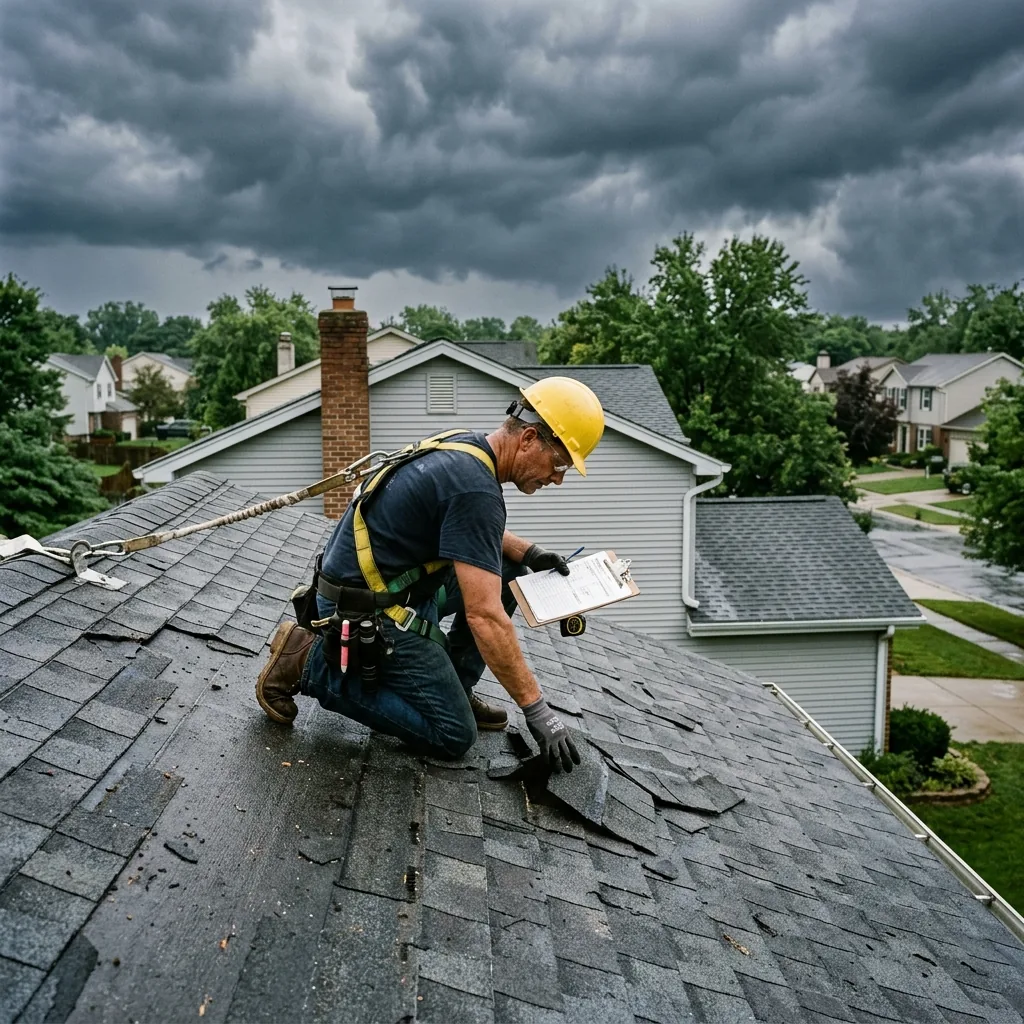
1. Get the roof inspected and documented. Before you file anything, have a professional look at the roof. Hail bruising and lifted shingles are nearly impossible to spot from the ground, and you want photographic evidence tied to a date. This inspection also tells you whether the damage is likely to exceed your deductible — if it isn't, filing a claim gains you nothing.
2. File the claim promptly. Policies require "prompt" notice, and many set hard deadlines measured from the storm date. Your insurer will open a claim, assign a claim number, and schedule an adjuster.
3. Meet the adjuster — with your roofer present. The insurance adjuster inspects the roof and writes an estimate of covered damage. We strongly recommend having your contractor on the roof at the same time. Adjusters are human; a roofer who documented the damage beforehand makes sure nothing gets missed, from soft-metal hits on vents and flashing to matted ridge caps.
4. Review the settlement and scope of work. The insurer issues an estimate and first payment (on RCV policies, depreciation is held back). If the adjuster's scope missed damage or underpriced the work, your contractor can submit a supplement with evidence — this is routine, not adversarial.
5. Complete the work and recover depreciation. Once the roof is replaced and the final invoice is submitted, RCV policyholders receive the held-back depreciation. You pay your deductible — and legally, that's not optional. Any contractor who offers to "eat the deductible" is committing insurance fraud in Georgia, and that's a contractor to avoid.
Why Legitimate Claims Get Denied
Most denials we see in West Georgia come down to four things: the damage was reported too late, the damage was attributed to wear and tear rather than a storm, the documentation was thin, or the homeowner filed for damage that never reached the deductible in the first place.
Every one of those is avoidable with the same habit: after any serious storm, get a free professional inspection with photos, even if the roof looks fine. If there's damage, you have dated evidence connecting it to the event. If there isn't, you have peace of mind and a baseline record for the future. Our storm damage restoration team in Douglasville does exactly this documentation work every storm season.
Repair or Replace? Let the Evidence Decide
Insurance outcomes range from a targeted repair to a full replacement, depending on the extent and distribution of damage. Scattered wind damage on one slope may warrant professional roof repair; widespread hail bruising usually justifies full roof replacement — and if your shingle line has been discontinued, matching rules can push a partial loss toward a full one. As an Owens Corning Preferred Contractor, McKinley installs materials with manufacturer-backed warranties, so the roof you get after a claim is better than the one the storm took.
Frequently Asked Questions
Should I call a roofer or my insurance company first?
In most cases it pays to have a professional roof inspection before you file. A roofer can document the damage, tell you whether it is likely to exceed your deductible, and save you from filing a claim that gets denied. McKinley Roofing provides free inspections and photo documentation you can submit with your claim.
Will filing a roof claim raise my insurance rates?
A single weather-related claim usually has less impact on your premium than homeowners fear, because storm damage is considered an "act of God" rather than negligence. That said, every insurer weighs claims differently — which is another reason to confirm the damage justifies a claim before you file.
How long do I have to file a roof damage claim in Georgia?
Deadlines are set by your policy, and many give you six months to a year from the date of the storm. The problem is that hail and wind damage are easy to miss from the ground, so the clock can run out before you know you have damage. If a storm has passed through West Georgia, get an inspection promptly even if nothing looks wrong.
What is the difference between ACV and RCV coverage?
Replacement Cost Value (RCV) policies pay what it actually costs to replace your roof today, typically releasing recoverable depreciation after the work is complete. Actual Cash Value (ACV) policies subtract depreciation for the age and condition of your old roof and pay only the remainder — which can leave a large gap on an older roof. Check your declarations page to see which you carry.
Does homeowners insurance cover roof leaks?
Generally yes, when the leak is caused by a sudden covered event like wind or hail. Leaks caused by age, wear, or lack of maintenance are typically excluded. This is why documentation matters: an inspection that ties the leak to a specific storm event makes the difference between an approved and a denied claim.
This article is general information, not legal or insurance advice. Coverage varies by policy — always confirm the details of your own policy with your insurance provider.
Storm Damage? Start with a Free Inspection
Before you call your insurance company, know exactly what's on your roof. McKinley Roofing and Restoration provides free, documented inspections across Douglasville and West Georgia — and we'll walk the claim with you from adjuster meeting to final nail.
McKinley Roofing and Restoration · Douglasville, GA