Storm Damage Roof Repair in Douglasville: What to Do First
Around here, the bad ones tend to show up in the afternoon. The National Weather Service office in Peachtree City, which issues the warnings for Douglas County, says hail, damaging wind and tornadoes in its area are most likely from mid-afternoon into early evening. So it's usually still daylight when the line clears out of Douglasville, the power blinks back on, and you walk outside to look at the roof.
Maybe there are shingles in the yard. Maybe a limb came down on the back slope. Maybe nothing looks wrong at all. Either way, the next few days matter more than most homeowners realize, for the house and for any insurance claim that follows. Here is the order we'd walk a neighbor through.
1. Make Sure Everyone Is Safe
Before anybody thinks about shingles, check on people.
- Stay off the roof. A wet, storm-beaten roof is slick, and damaged decking can give under your weight. Roofers don't walk a roof in those conditions either.
- Stay away from downed lines. A limb lying across a power line can still be live. Keep kids and pets back and report it to your power company.
- Get out from under a fallen tree. West Georgia neighborhoods are full of tall pines and hardwoods growing close to the house. If one is resting on your roof, keep everyone out of the rooms underneath it. Trees shift.
- Smell gas or see sparks? Leave the house and call 911.
2. Slow Down the Water Inside
If water is coming in, your first job is limiting what it ruins.
Put buckets and towels under the drips, and move furniture, rugs and electronics out of the way. If water is running near a light fixture or outlet, shut that circuit off at the breaker. A ceiling that's sagging with water can come down all at once, so keep people out from under it.
If you can safely get into the attic with a flashlight, look for wet insulation, dripping nails or daylight coming through. That tells a roofer where to start, and it's worth a photo.
3. Get the Roof Covered, and Keep Every Receipt
Most homeowners policies expect you to take reasonable steps to keep damage from getting worse after a storm. A tarp over an opening is the classic example, and the reasonable cost of temporary repairs is usually part of the claim. Keep the receipts, and take photos before and after the tarp goes on.
A tarp only works if it's done right. It should run up and over the ridge so water can't get under the top edge, and it should be fastened through wood strips, not just weighed down with bricks that slide off in the next gust. Emergency tarping is part of our storm damage work for exactly this reason.
One more thing: covering the roof and replacing the roof are two separate decisions. Nobody should be asking you to sign a full replacement contract on the same afternoon they throw a tarp on the house.
4. Document Everything From the Ground
Insurance claims run on evidence, and the best evidence is collected early. Before anything gets cleaned up:
- Write down the date and approximate time of the storm.
- Photograph shingles or pieces of shingle in the yard, and set a couple aside.
- Photograph dents in the gutters, downspouts and the fins on your outdoor AC unit, plus torn window screens and any damage to siding, fences, mailboxes and cars. Those dings help show how big the hail was and which way it came from.
- Photograph any stains on ceilings or walls inside.
- Screenshot the severe weather alert on your phone.
If you ever need to show that a storm actually hit your area, NOAA keeps a public Storm Events Database where you can look up hail and wind reports by county. It runs a few months behind, so your own photos and screenshots are what carry a claim in the meantime.
5. Get a Professional Inspection Before You File
This is the step people skip, and it's the one that saves the most headaches. Hail bruising, creased shingles and lifted tabs are hard to see from the driveway, and plenty of roofs that look fine from the ground are damaged. The opposite happens too.
An inspection answers two questions before you call your insurance company: is there real storm damage, and is it likely to be more than your deductible? Many Georgia policies carry a separate wind and hail deductible figured as a percentage of your home's insured value, so check your declarations page. Filing for damage that never reaches the deductible gets you nothing except a claim in your history. Our guide to how roofing insurance claims work in Georgia covers deductibles, ACV and RCV in more detail.
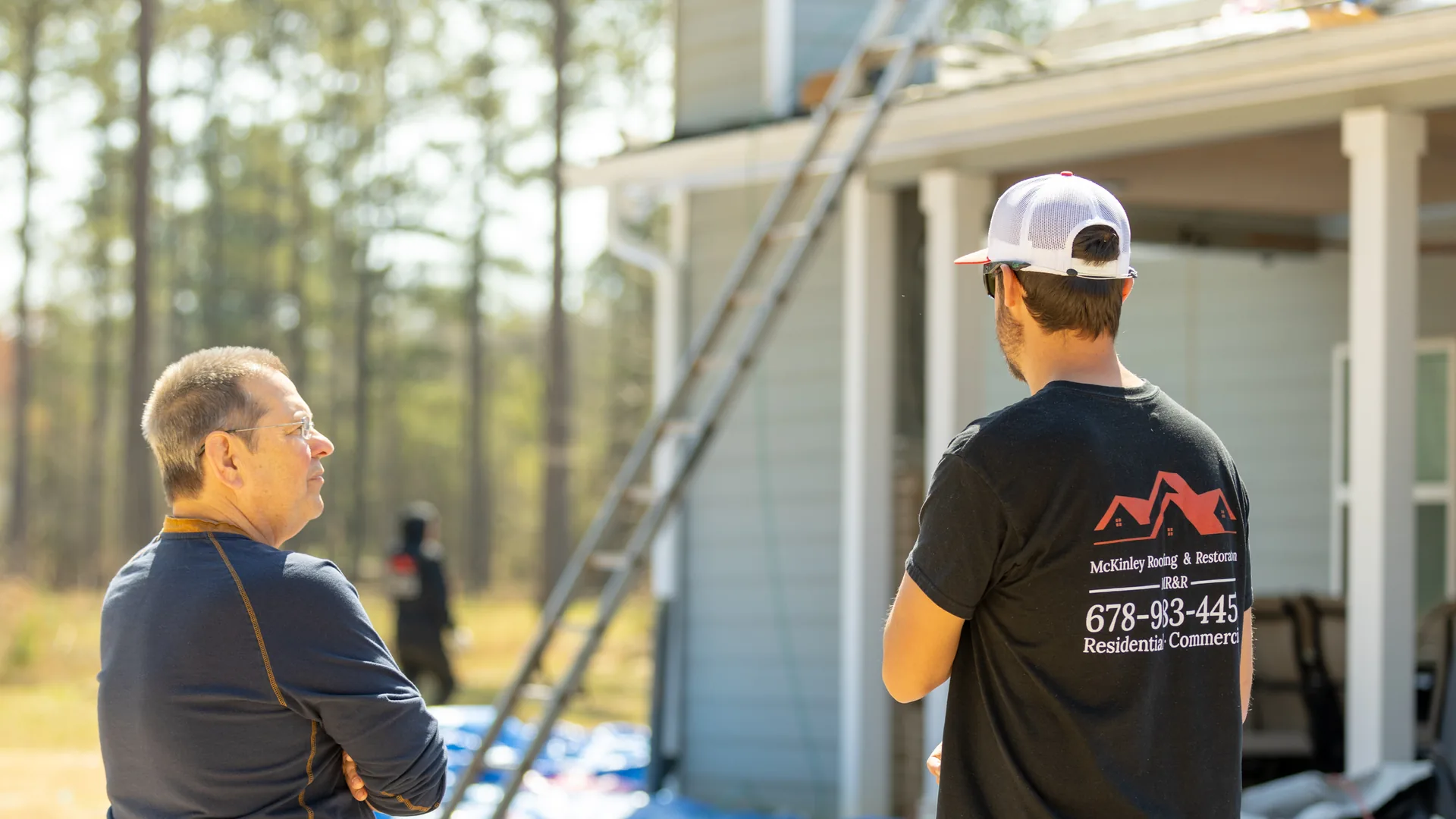
When we do a free inspection for storm damage roof repair in Douglasville, we get on the roof, check every slope along with the flashing, vents and gutters, and photograph what we find. You get a straight answer on whether it looks like storm damage, normal wear, or nothing at all.
6. File Promptly, Then Have Your Roofer Meet the Adjuster
If the inspection shows real damage, call your insurer and open a claim. Policies require prompt notice, and many set deadlines measured from the date of the storm. You'll get a claim number and an adjuster appointment.
When the adjuster comes, it helps to have your roofer on the roof at the same time. The roofer who documented the damage can point out every hit, crease and bent piece of flashing so nothing gets missed.
One thing to know: in Georgia, a roofing contractor isn't allowed to negotiate your claim for you. The claim is between you and your insurance company, or a licensed public adjuster if you hire one. A good roofer's job is to show the adjuster the damage and document the scope of the work.
7. Watch for Storm Chasers, and Know Your Georgia Rights
After a big hail day, the trucks with out-of-county tags and the door hangers show up fast. Some are legitimate. Some will be long gone by the time you have a leak to call about. Georgia's Fair Business Practices Act gives you a couple of protections worth knowing:
- You can cancel if your claim is denied. If you sign a roofing contract that will be paid through your insurance claim, you can cancel it before midnight of the fifth business day after your insurer tells you in writing that all or part of the claim isn't covered. The contractor is required to give you written notice of that right.
- Nobody can promise to cover your deductible. Georgia law bars roofing contractors from advertising or promising to pay or rebate any part of your insurance deductible. If someone offers to "take care of your deductible," close the door.
Beyond that, ask for a local address you could drive to, proof of insurance, and whether they'll pull the permit.
Repair or Replace? And What About Permits?
Wind damage on one slope can often be handled with a targeted roof repair. Widespread hail bruising across every slope usually points toward a replacement. The inspection photos should make the answer clear. If a contractor can't show you why they're recommending a full roof, keep asking.
Permits depend on the size of the job and where you live. Roof and storm damage work is one of the job types on Douglas County's own miscellaneous building permit application, and if your home is inside city limits, the permit usually comes from the city instead. Either way, your contractor should know which office handles your address and pull the permit, not hand that chore to you.
These same steps apply whether you're in Douglasville, Lithia Springs, or out toward Villa Rica, Carrollton and Newnan. Storms don't stop at the county line.
This article is general information, not legal or insurance advice. Coverage varies by policy. Always confirm the details of your own policy with your insurance provider.
Frequently Asked Questions
How soon after a storm should I get my roof inspected?
As soon as it's safe, ideally within days. Hail and wind damage can take months to show up as a leak, and by then it's harder to tie to a specific storm. An early inspection gives you dated photos and keeps you well inside your policy's notice deadline.
Can I tarp my own roof?
You can, but think hard about it. Ladders and wet shingles are how a roof problem turns into a trip to the emergency room. If you do it yourself, run the tarp over the ridge, fasten it through wood strips, take photos, and keep the receipts, since reasonable temporary repairs are usually part of the claim.
Do I need a permit for storm damage roof repair in Douglas County?
It depends on the size of the job and whether you're in unincorporated Douglas County or inside city limits. The county lists roof and storm damage work on its miscellaneous building permit application, and city addresses generally go through the city. A reputable contractor will know which office handles your address and pull the permit.
Does McKinley Roofing help with the insurance claim?
Yes. We'll do a free inspection, photograph and document the damage, and meet your adjuster on the roof. Under Georgia law, the claim itself stays between you and your insurance company. No roofer can negotiate it for you or offer to cover your deductible.
Storm Hit Your Roof? Start With a Free Inspection
McKinley Roofing and Restoration is family-owned and based right here in Douglasville. Call (678) 983-4455 or request a free inspection on our Contact page, and we'll get eyes on your roof and photos in your hands before you call your insurance company.
McKinley Roofing and Restoration · Douglasville, GA